Drywall Repair Tips for Homeowners in Irving, TX
- Jimmy Marín
- Jun 13
- 4 min read

Updated: Jul 24
Drywall Damage: A Homeowner's Guide to Easy Repairs
Drywall damage happens to all of us at some point. Whether it’s a small hole from a doorknob, a crack from settling, or water damage from a leak, fixing drywall can feel overwhelming. But it doesn’t have to be that way. With the right approach and tools, you can repair drywall yourself and keep your home looking great.
In this post, I’ll walk you through the basics of drywall repair. I’ll also share some helpful products and services that make the job easier. If you’re in Irving, TX, or nearby, this guide will help you tackle drywall problems with confidence.
Understanding Drywall Damage
Drywall is the material that makes up most interior walls and ceilings. It’s made of gypsum plaster sandwiched between two sheets of paper. While drywall is sturdy, it’s not immune to damage.
Common types of drywall damage include:
Holes: These can be small, like nail holes, or larger from accidents.
Cracks: Often caused by house settling or temperature changes.
Water damage: Stains, warping, or crumbling from leaks.
Dents and scratches: From furniture or everyday wear and tear.
Knowing the type of damage helps you choose the right repair method. Small holes and cracks are usually easy to fix yourself. Water damage might require replacing the drywall section.
Tools and Materials You’ll Need
Before starting, gather the right tools and materials. Here’s a basic list:
Putty knife or drywall knife
Sandpaper or sanding block (medium and fine grit)
Drywall compound (also called joint compound or spackle)
Drywall patch or mesh tape (for larger holes)
Primer and paint to match your wall
Utility knife
Dust mask and safety glasses
One product I recommend is the 3M Patch Plus Primer. It’s a drywall repair compound that combines patching and priming in one step. This product saves time and gives a smooth finish. You can check it out here.
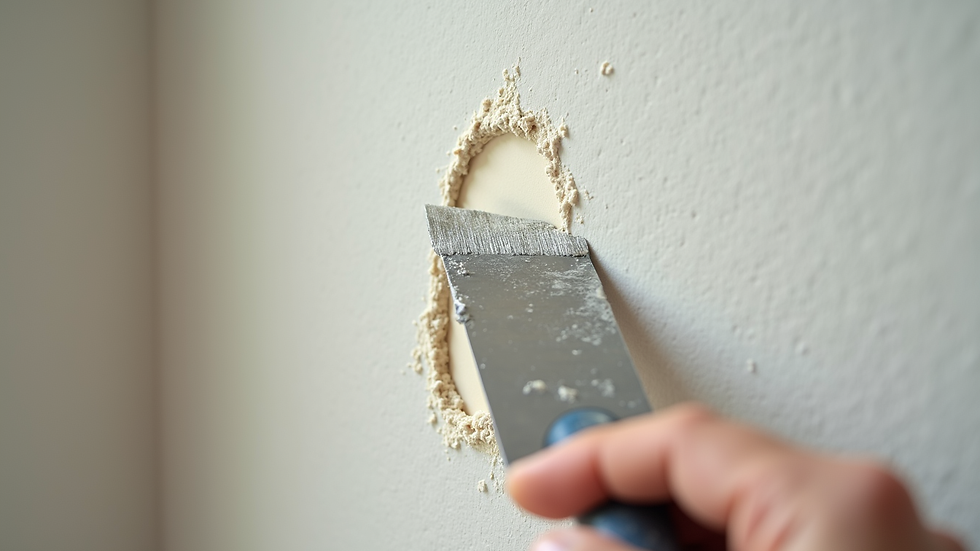
Close-up view of a small drywall hole being patched with putty knife
How to Repair Small Holes and Cracks
Small holes and cracks are the easiest to fix. Here’s a simple step-by-step:
Clean the area: Remove any loose drywall or dust.
Apply drywall compound: Use a putty knife to spread the compound over the hole or crack. Press firmly to fill the space.
Smooth the surface: Feather the edges so it blends with the wall.
Let it dry: Drying time varies but usually takes a few hours.
Sand the patch: Use fine-grit sandpaper to smooth the surface.
Repeat if needed: For deeper holes, apply a second coat.
Prime and paint: Once smooth, prime the area and paint to match.
For cracks, you might want to use mesh tape before applying the compound. This helps prevent the crack from reopening.
Fixing Larger Holes and Damage
Larger holes, like those from doorknobs or accidents, need more work. You’ll want to use a drywall patch or cut out the damaged section and replace it.
Here’s how:
Cut out the damaged drywall: Use a utility knife to make a clean square or rectangle around the hole.
Attach a backing: Place a small piece of wood inside the hole and screw it to the drywall edges. This gives support for the patch.
Cut a drywall patch: Cut a piece of drywall to fit the hole exactly.
Screw the patch to the backing: Secure the patch in place.
Apply mesh tape around edges: This helps blend the patch with the wall.
Cover with drywall compound: Apply compound over the tape and patch, feathering the edges.
Sand and repeat: Sand smooth and add more compound if needed.
Prime and paint: Finish with primer and paint.
If you want a product that simplifies this process, the 3M Patch Plus Primer mentioned earlier works well for small to medium patches. For bigger jobs, you might consider professional help.
When to Call a Professional
Sometimes drywall damage is more than a quick fix. Water damage, large holes, or structural issues might need a pro. If you notice:
Mold or mildew behind the drywall
Extensive water damage or sagging walls
Cracks wider than 1/4 inch or spreading
Damage covering a large area
It’s best to call a handyman or drywall specialist. In Irving, TX, services like El Handyman offer home repair help for drywall and other issues. They can assess the damage and fix it safely and efficiently.

Eye-level view of a handyman repairing drywall with sanding block
Tips to Prevent Drywall Damage
Prevention is always better than repair. Here are some tips to keep your drywall in good shape:
Use door stoppers to avoid holes from doorknobs.
Fix leaks quickly to prevent water damage.
Avoid hanging heavy items without proper anchors.
Keep humidity levels in check to prevent cracks.
Handle furniture carefully near walls.
Taking these steps can save you time and money in the long run.
Comparing Drywall Repair Products
If you’re shopping for drywall repair products, here are two popular options to consider:
3M Patch Plus Primer
Combines patching and priming in one step
Easy to apply and sands smoothly
Good for small to medium holes and cracks
Available at most hardware stores
DAP DryDex Spackling
Changes color from pink to white when dry
Helps you know when it’s ready to sand
Works well for small holes and cracks
Affordable and widely available
Both products are user-friendly and great for DIY repairs. I personally like the 3M Patch Plus Primer for its time-saving qualities, but DryDex is a solid choice if you want a clear drying indicator.

High angle view of drywall repair tools and products on a workbench
Conclusion
Drywall repair doesn’t have to be a headache. With the right tools, a bit of patience, and some helpful products like the 3M Patch Plus Primer, you can fix most common drywall problems yourself. For bigger issues or if you want to save time, professional services like El Handyman in Irving, TX, are ready to help keep your home safe and looking great.
If you’re ready to tackle that drywall damage, start with a small patch and see how easy it can be. And remember, keeping your walls in good shape protects your home’s value and comfort.
This post is for informational purposes only and does not replace professional advice for serious damage.


Comments